The most important power in the next era of #AI may not be who controls the most compute—but who has the right to define you.
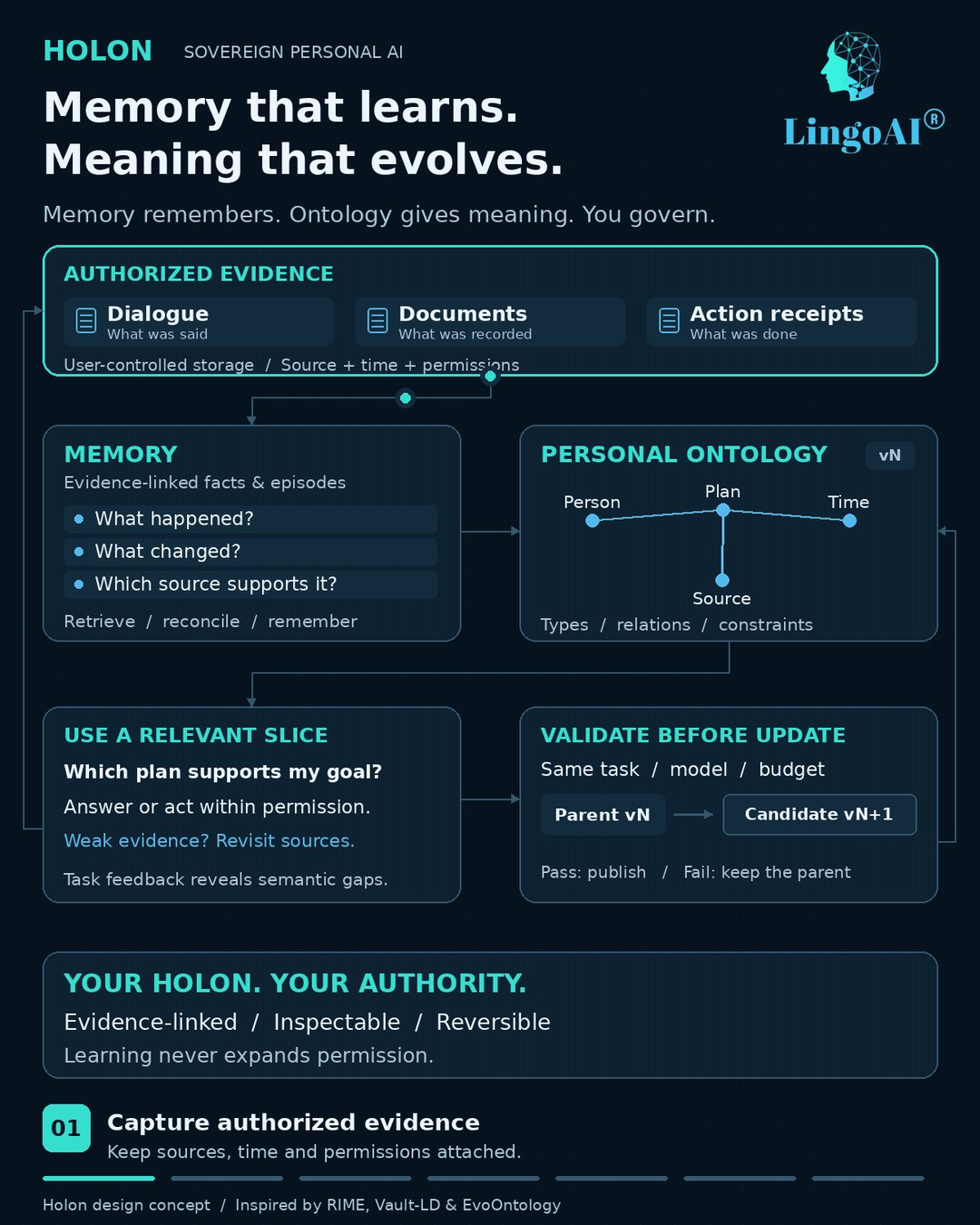
An #ontology is more than a database or a collection of labels. It is a structured model of what exists, how things relate to one another, and which rules give data meaning. It enables machines not merely to process information, but to understand its context.
The #SemanticWeb takes this further by allowing data, knowledge, and intelligent agents to connect through machine-readable meaning—moving the internet from linking documents to connecting knowledge.
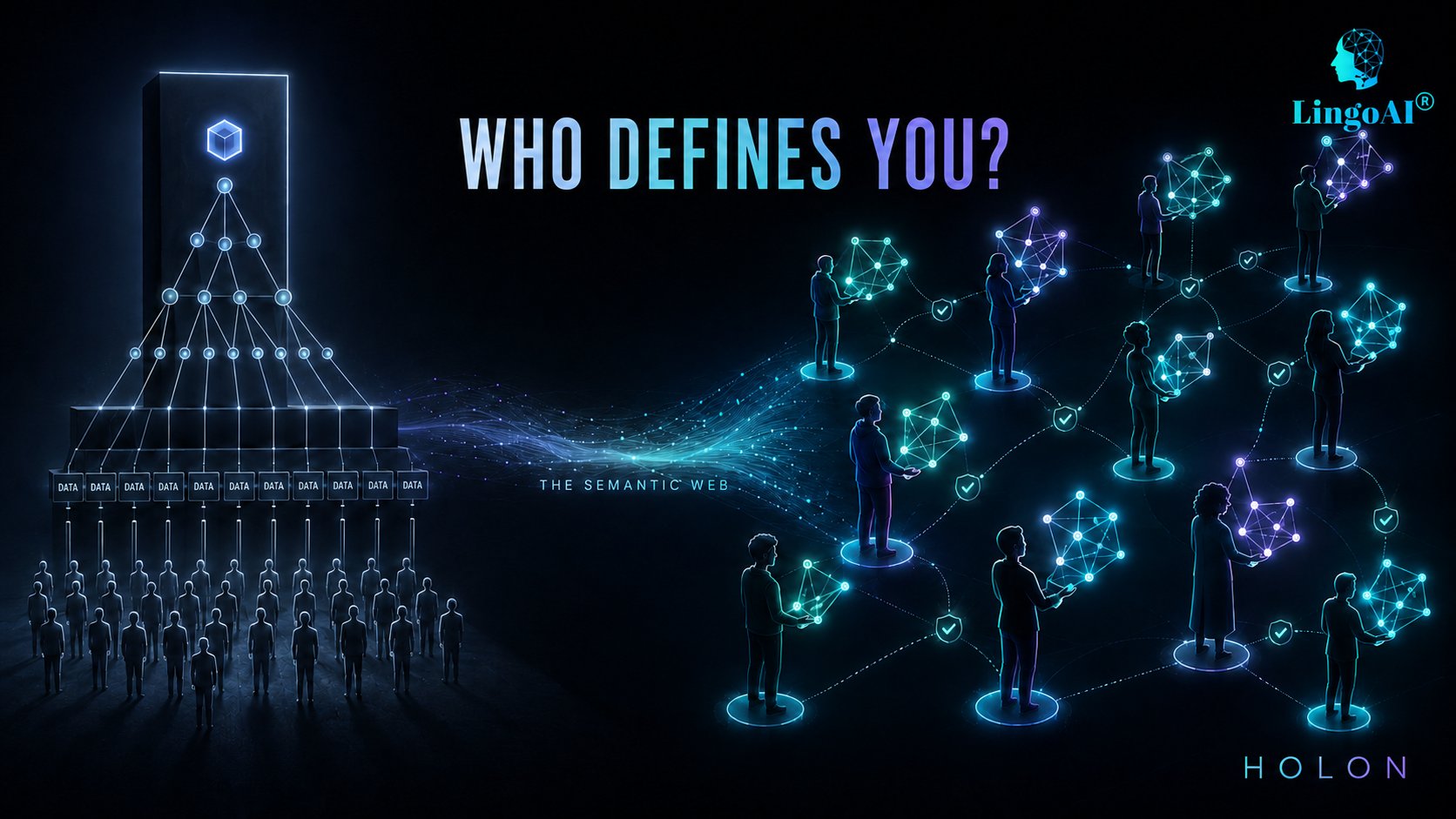
Centralized ontologies can improve consistency within specific organizations and applications. But when one ontology becomes the universal authority for describing people, the platform controlling it gains extraordinary power: the power to classify us, interpret us, and potentially determine what information, services, and opportunities are available to us.
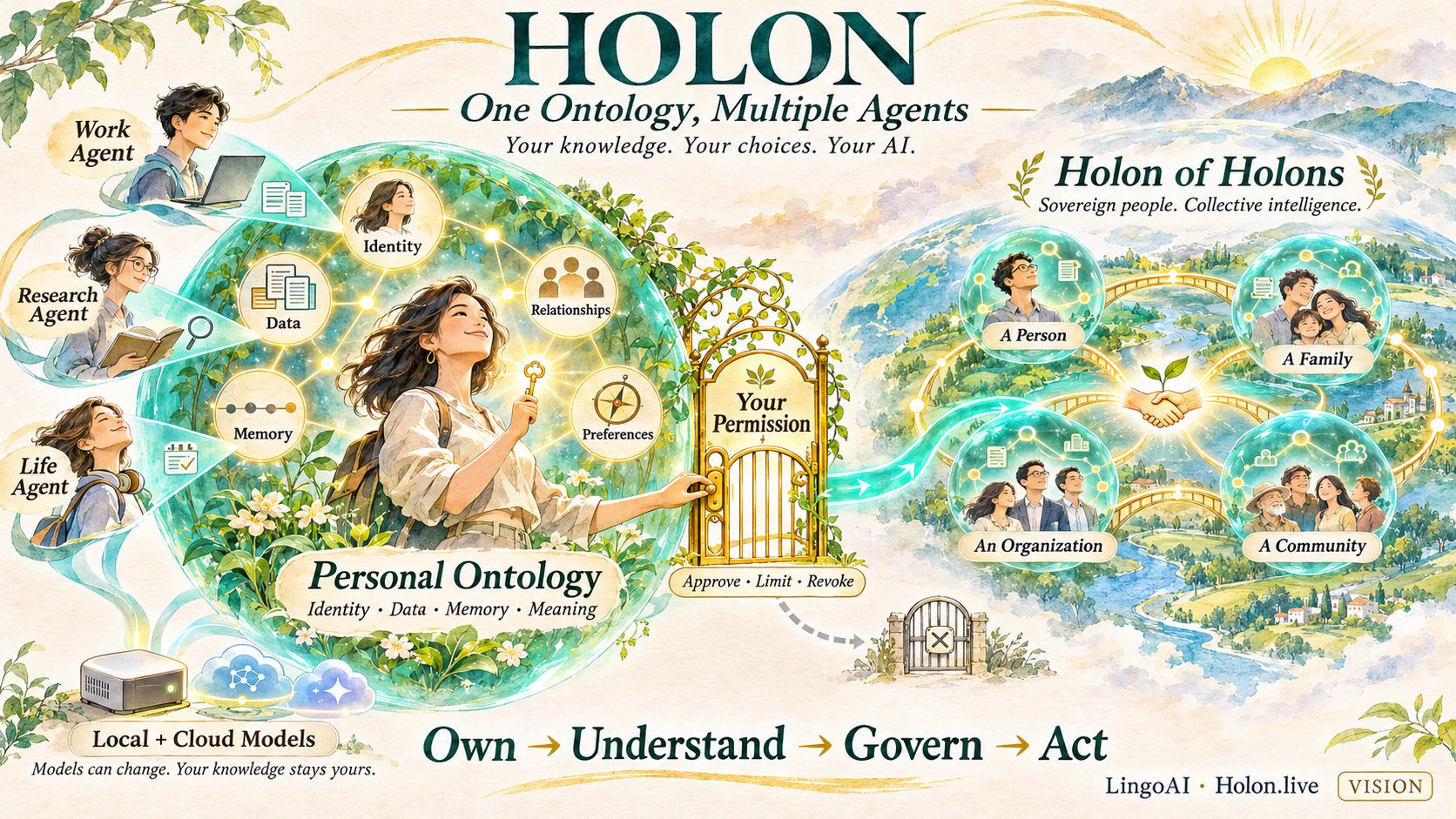
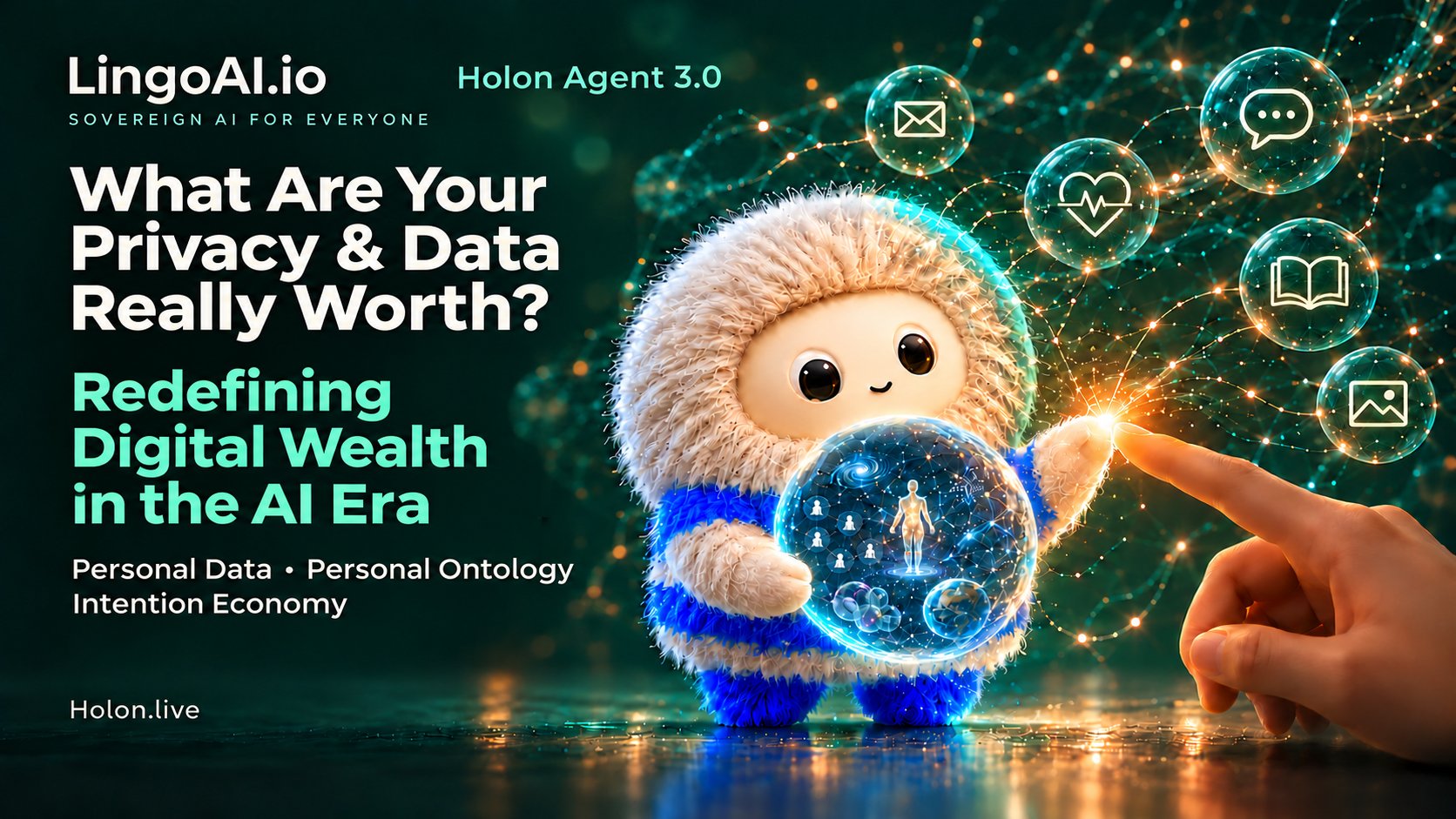
A decentralized ontology does not mean abandoning shared standards. It means that every person can own their data, identity, relationships, and knowledge graph—and decide what to connect, whom to authorize, and which AI may use them.
Your ontology should not merely be a platform’s record about you.
It should belong to you, serve you, and evolve with you.
This is the future #LingoAI #Holon is building: personal AI grounded in personal ontology and sovereign data. Different Holons can communicate and collaborate through open semantic standards without surrendering human identity, knowledge, and agency to a central authority.
Centralized AI seeks to build one brain that understands everyone.
Holon seeks to give every person an intelligence that understands them.
This is more than the next generation of the Semantic Web.
It is part of the foundation for preserving human autonomy in the age of AI.
#Holon #Ontology #SemanticWeb #DataSovereignty #SovereignAI
Editorial context: This is LingoAI’s argument about semantics and personal agency. Ontology organizes meaning; access control and authorization remain separate mechanisms. Descriptions of centralized and decentralized systems express the source’s comparison, not a certification of all products.