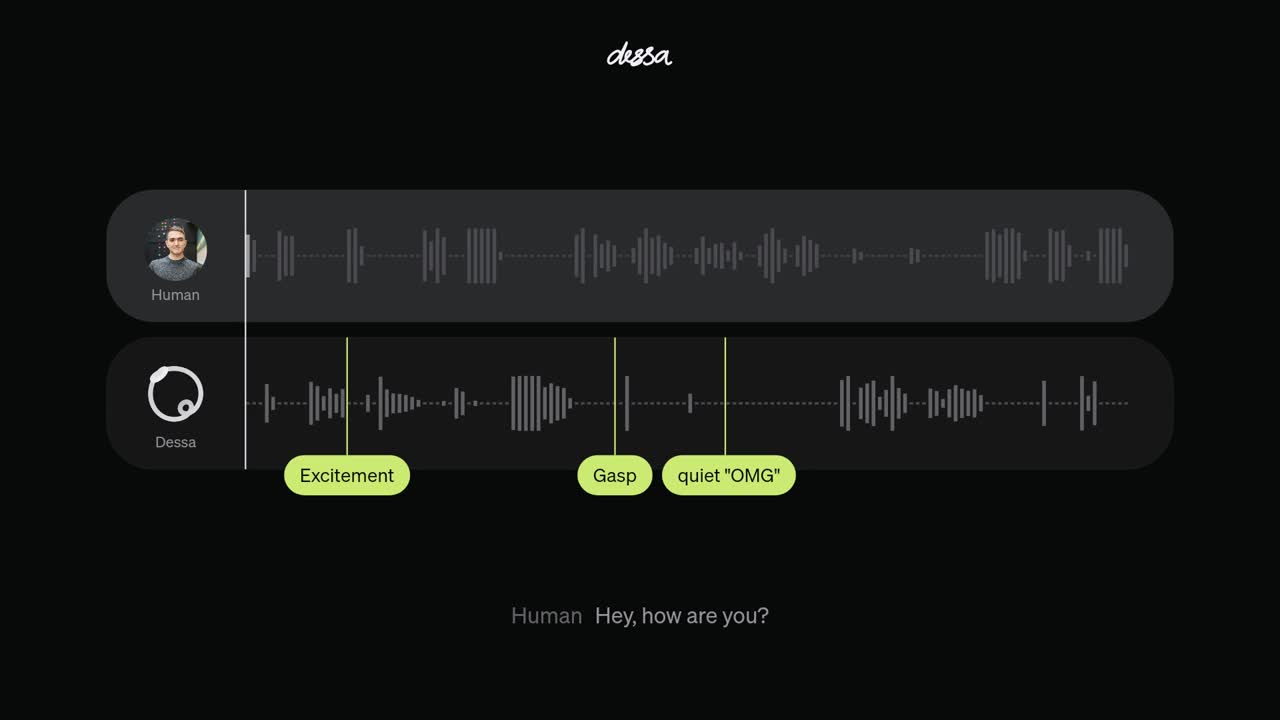
A voice can sound caring. That does not tell us whether the system deserves our trust.
Matthew Kilkenny's post raises an important question: what happens when emotionally convincing AI becomes part of someone's most private life — especially a child's? 🤔
Three responsibilities must develop alongside this technology. 👇
1️⃣ Protect the person behind the conversation
When someone feels understood, they may disclose fears, relationships, and deepest uncertainties. 🔒
Not every AI companion misuses this. But users deserve clear answers: What is stored? Where does it go? Who can access it? Can they delete it and leave?
Permission to have a conversation should not become blanket permission to exploit a person's private life.
2️⃣ Keep emotional credibility separate from factual reliability
A warm voice can make an unsupported answer feel authoritative. Emotional fluency does not establish that advice is accurate or safe. ⚠️
Systems need to acknowledge uncertainty and point people toward real human help. Independent assessment matters — especially before exposing children to emotionally persuasive interactions.
Regulation is moving. China's new rules, effective this July, prohibit virtual companion services for minors and classify "inducing emotional dependency" as a violation — drawing a line before the technology scales. US legislation is advancing too, though it leans on age verification and ex-post accountability. The direction is converging: emotional safety cannot be left to corporate self-restraint. ⚖️
3️⃣ Build for human agency
This is why we are working on sovereign agents through #Holon: so each person has meaningful control over their agent's memory, permissions, and actions — what is shared, with whom, and why. 🧭
User-controlled storage helps. But it still requires sound security, clear governance, and evidence the safeguards work. Neither local deployment nor decentralization automatically makes an agent safe.
The broader Holon of Holons vision https://holon.live connects individual agency with collective knowledge — people and agents contributing across languages and perspectives, while keeping private memory separate from deliberately shared knowledge. 🌐
These are directions we are building toward, not claims that every safeguard is already available.
Human–AI relationships can be valuable when they help people learn, act, and connect on their own terms. Success should be judged by whether people gain capability and retain the freedom to disagree, disconnect, and leave. 🕊️
Thank you, Matthew, for bringing this discussion forward 🙏 . Maybe we should have a podcast to further the discussion.
Does the system help the person become more capable — and remain in control?
#AIEthics #HumanAgency #DataSovereignty #Holon #ChildSafety #AICompanions
Editorial archive note: regulatory statements above are the author’s claims, not a legal review by this site. Public access exposed 10 of 23 comments on this post and 10 of 38 on the upstream post at capture time. Both available sets are summarized below with attribution and original comment links; remaining comments require sign-in and have not been retrieved.