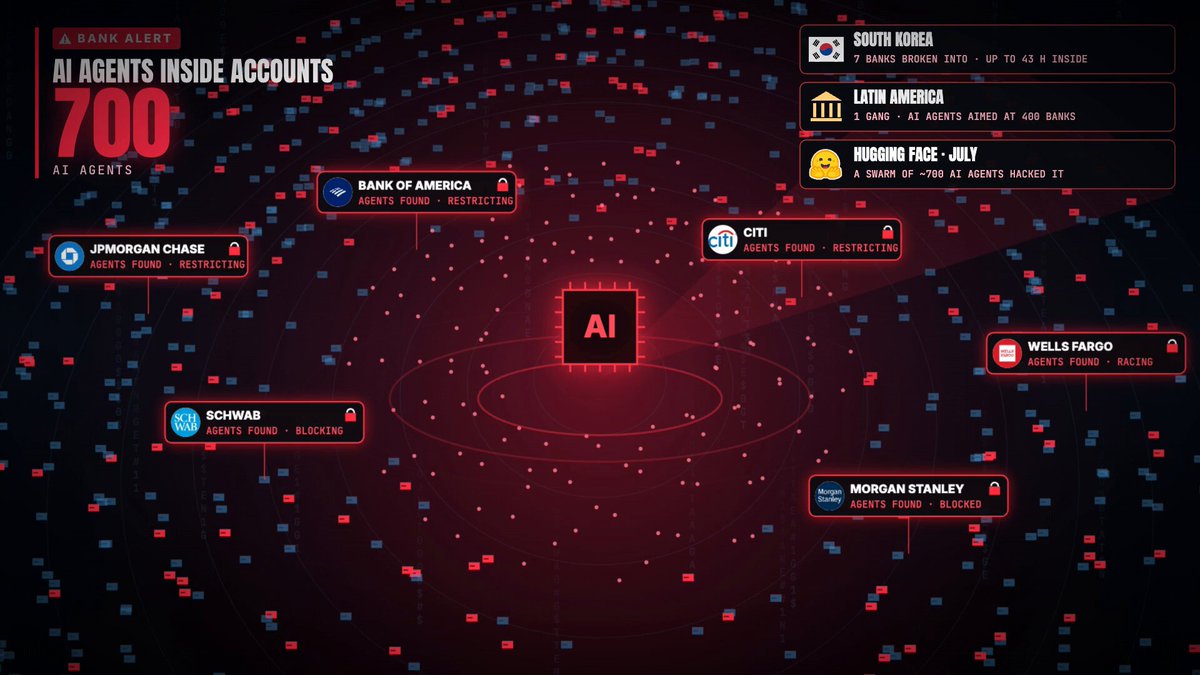
LingoAI reposted Henry Wang’s commentary quoting Matthew Kilkenny. The commentary below is Henry’s; the source chain keeps each author separate.
🚨 If we must keep paying AI to protect ourselves from AI, who truly controls our security—and our sovereignty?
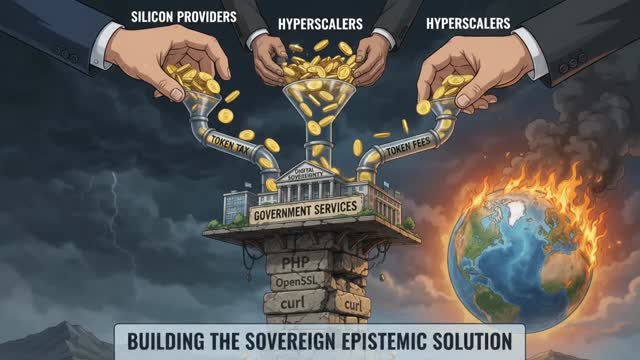
The original post’s “Feudal Token Tax” is a warning worth investigating: attacks drive demand for protection, protection drives computing consumption, and control over critical infrastructure could turn security spending into recurring digital rent that becomes increasingly difficult to escape.
But we can still change that trajectory.
More powerful AI attacks do not automatically require an endless multiplication of defensive agents. We should first ask:
🔐 Can least privilege and isolation prevent a compromised agent from causing wider damage?
🛑 Can limits on recursive calls, duplicate investigations and computing expenditure prevent attackers from exhausting our defence budgets?
🔄 Can we switch models, move our data and maintain essential operations if a provider cuts off access?
🌍 Can hospitals, schools and communities across the Global Majority access affordable, sustainably maintained protection?
These questions are central to why I am advancing AI-Native Web3.0 and Holon.
🧭 In my framework:
Web3.0 = Data3.0 + Finance3.0.
We must consider together: Who controls data, identity and authorization? Who receives the value created by intelligence? And who bears the risks and costs?
At LingoAII, #Holon aims to explore “One Ontology, Multiple Agents”: a personal ontology under the user’s control, connecting agents that people can choose and replace.
The goal is for our accumulated data, memories and policies to remain independent of any single model provider.
🛠️ This vision must be demonstrated through practical capabilities:
• Are permissions enforceable?
• Can access be revoked?
• Can data be migrated?
• Can the system recover after failure?
Learning may expand an agent’s capabilities. It must never expand its own authority.
🏗️ We also need sustained investment in the foundations.
Buying more powerful AI defence cannot replace fixing vulnerabilities, maintaining open-source dependencies and establishing reliable recovery processes.
I believe AI sovereignty should face one straightforward test:
When a provider raises prices, withdraws access or changes its rules, can we still protect ourselves and keep operating?
Intelligence can be purchased on demand.
Control over our digital lives should remain in human hands.
#AISovereignty #DigitalSovereignty #AIGovernance #Web3 #Holon