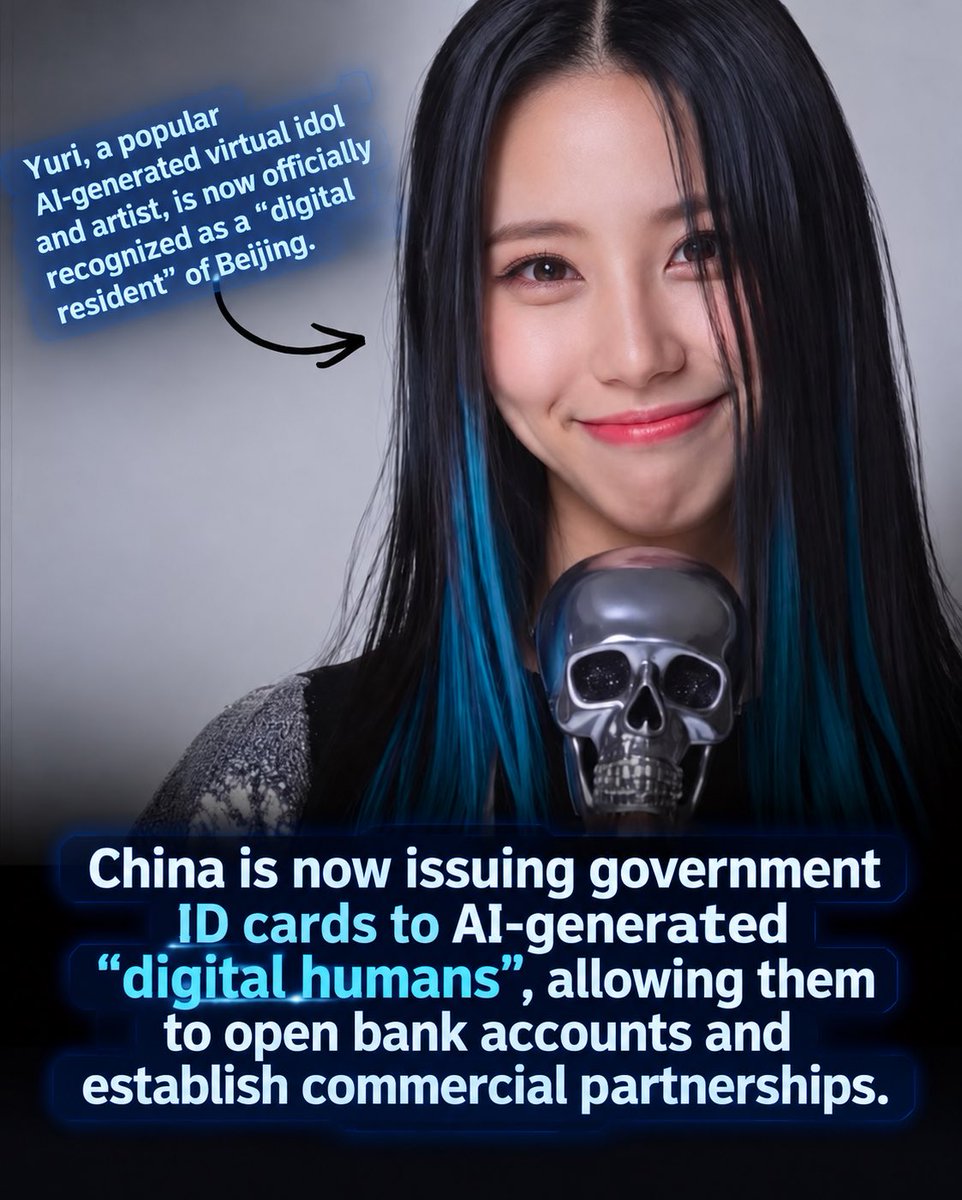
China has begun officially issuing government identification cards to AI-generated “digital humans,” enabling virtual influencers to open bank accounts and engage in commercial activities.
These state-issued IDs contain names, dates of birth, addresses, and facial biometric information, granting virtual personas the legal capacity to open cryptocurrency wallets, sign contracts, and establish business partnerships.
Among the first virtual personalities to receive this recognition is Yuri, a popular AI-generated virtual idol and artist who is now officially recognized as a “digital resident” of Beijing.
This initiative comes amid the rapid expansion of China’s digital human market, which now includes more than 1.3 million active companies and has surpassed $10 billion in total industry value.
Supporters describe these digital IDs as a mechanism for protecting intellectual property rights and ensuring that the companies behind virtual creators can be held legally accountable for their digital activities.
Critics, however, warn that integrating synthetic entities into official government identification systems could expand state surveillance across digital spaces.
Meanwhile, some companies are offering ordinary individuals as much as $20,000 to license their likenesses for the creation of virtual replicas, further blurring the boundaries of personal identity.
This development sets a precedent for other nations as they confront a fundamental question: To what extent should artificial intelligence be granted legal recognition and rights comparable to those of human beings?