What Is a #Holon—and Why Is It Foundational to #LingoAI?
The term Holon was introduced by Arthur Koestler in his 1967 book The Ghost in the Machine. It combines the Greek holos, meaning “whole,” with -on, meaning “part” or “particle.”
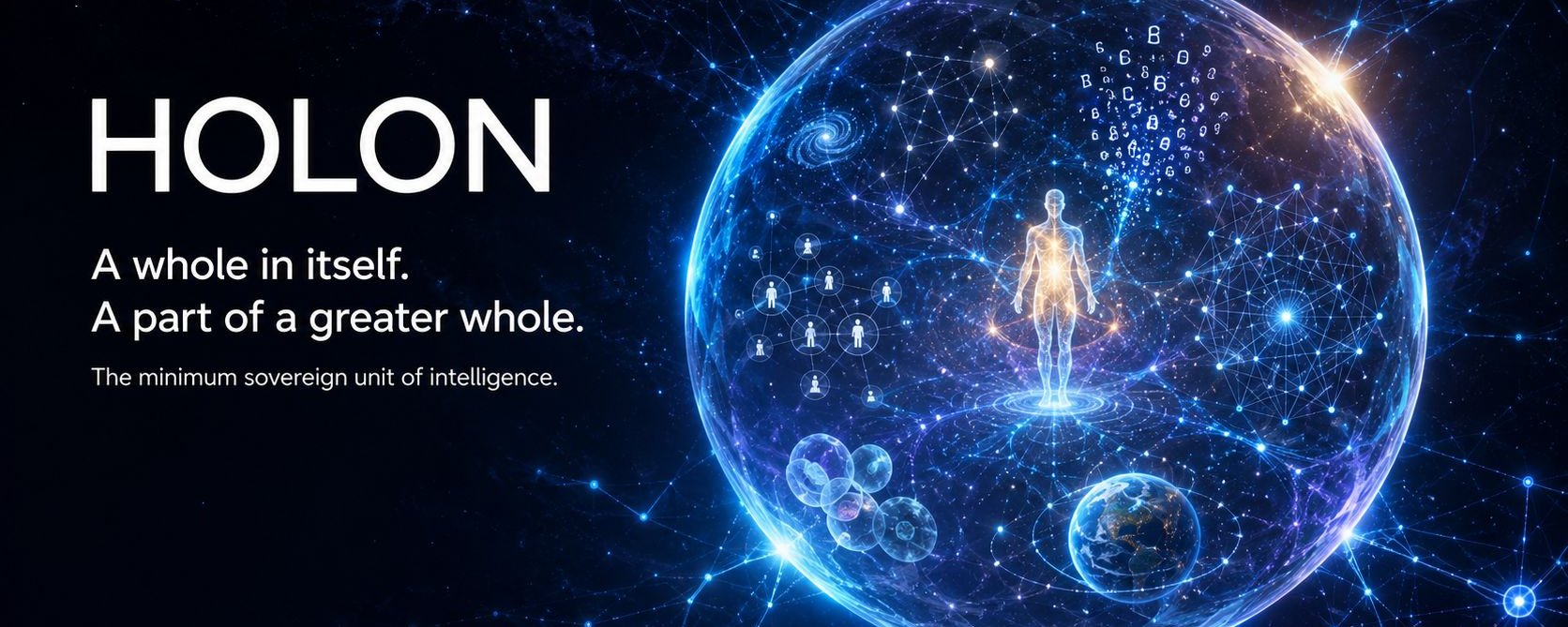
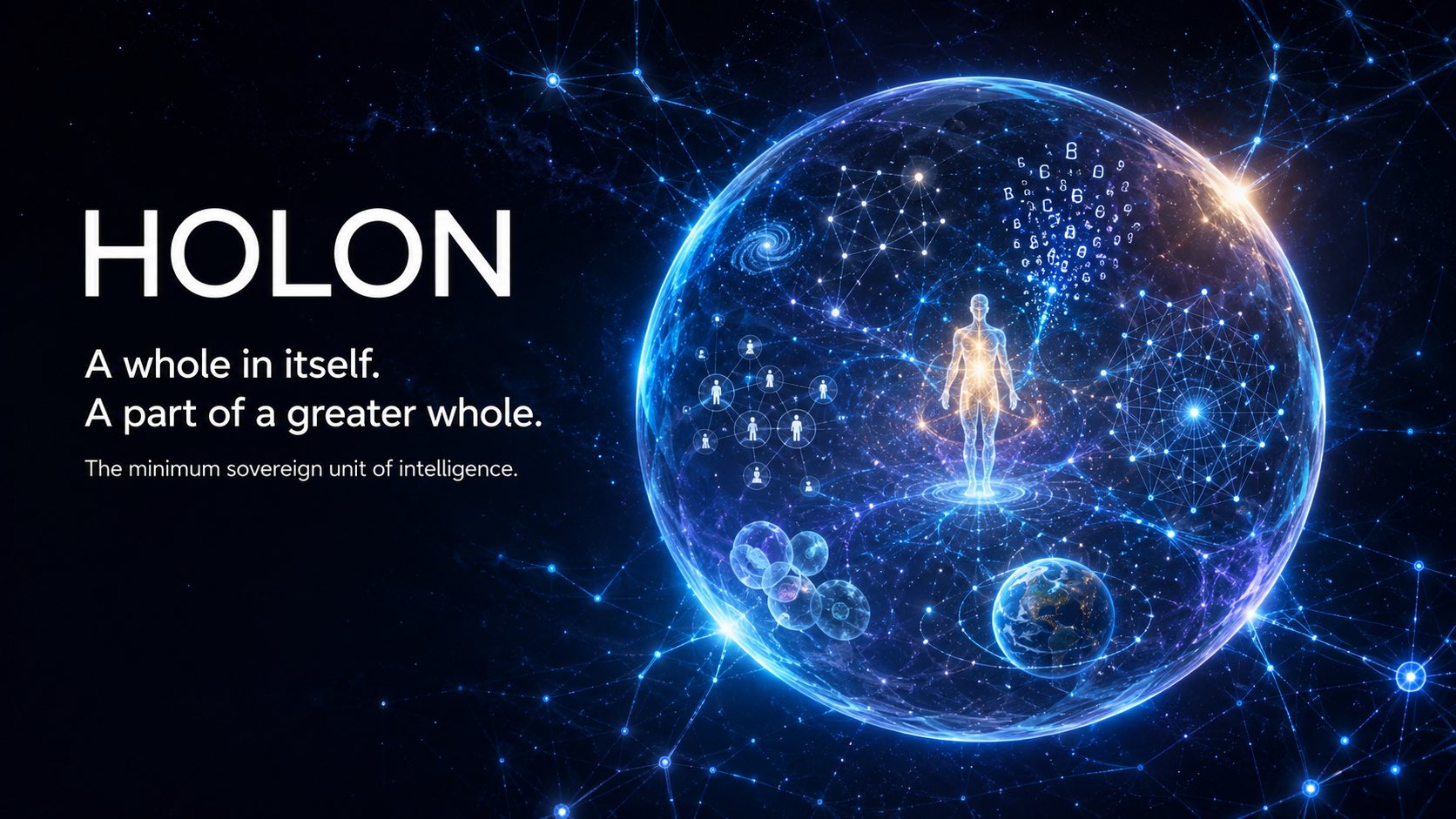
A Holon is therefore both:
a complete, autonomous whole and a constituent part of something greater.
A cell is a whole and part of a body. A person is a sovereign individual and part of society. A language has its own worldview while contributing to humanity’s collective intelligence.
Koestler described every Holon as “Janus-faced”: looking inward, it preserves its identity, boundaries and autonomy; looking outward, it cooperates with other Holons. This organic order of autonomous yet interdependent wholes is called a Holarchy.
LingoAI gives this philosophy a digital incarnation.
A LingoAI Personal Holon unites sovereign identity, user-owned data, long-term memory, Personal #Ontology, AI agency, permissions, rights and value.
It is a whole because it maintains its own identity, data boundaries, memory, knowledge, intelligence and intent.
It is a part because it can collaborate with people, AI agents, communities and marketplaces—sharing only what its owner authorizes, without surrendering sovereignty.
Unlike a platform-owned chatbot, a Holon belongs to the person or organization it represents. It understands its subject through a Personal Ontology, preserves continuity through long-term memory and acts within verifiable authorization boundaries.
Holon is also the sovereign intelligence unit within the Grand Unified Theory of Web3.0, proposed by @HenryWang2021 —Henry Wang, Cofounder of LingoAI.
Henry Wang coined and introduced the term “Web3.0” in 2003, defining the complete next-generation Internet as:
Web3.0 = Data3.0 + Finance3.0
Data3.0 gives each Holon sovereignty over identity, data, knowledge and AI. Finance3.0 gives it sovereignty over rights, incentives and digital value.
Therefore:
Holon = Data Sovereignty + Intelligence Sovereignty + Agency Sovereignty + Value Sovereignty
Henry Wang also defined the next Internet’s exchange paradigm:
Token Switching—Tongyuan Switching(通元交换)
In #Data3.0, a Token is a linguistic unit through which AI processes language and knowledge.
In #Finance3.0, a Token represents rights and value. When unified, it can carry meaning, permissions, provenance, intelligence and value.
Packet Switching connected machines and created the Information Internet. Token Switching connects Holons to create an Internet of Intelligence and Value.
The future of collective intelligence should not be one centralized supermodel absorbing everyone’s data, memory and autonomy. It should emerge from billions of sovereign Holons—each preserving its identity while contributing to communities, civilizations and humanity.
The Holon is the minimum sovereign unit of intelligence and the fundamental building block of collective wisdom.
Every person can be a whole.
Every whole can remain sovereign.
Every sovereign Holon can become part of something greater.
#Holon #LingoAI #SovereignAI #Web3
Editorial context: The source distinguishes a historical philosophical concept from LingoAI’s digital interpretation. First-use and authorship claims remain attributed to the author. The minimum sovereign unit is a project definition, not an industry-wide standard or proof that all described capabilities are deployed.